Why You Should Cook Fish More Often
If chicken seems to make its way onto your dinner table every week, it might be time to switch things up with fish.
Fish is quick to prepare, easy to season, and works with everything from fresh lemon and herbs to spicy marinades and creamy sauces. Many varieties are also a great source of protein and healthy fats, making them a useful choice for a balanced meal.
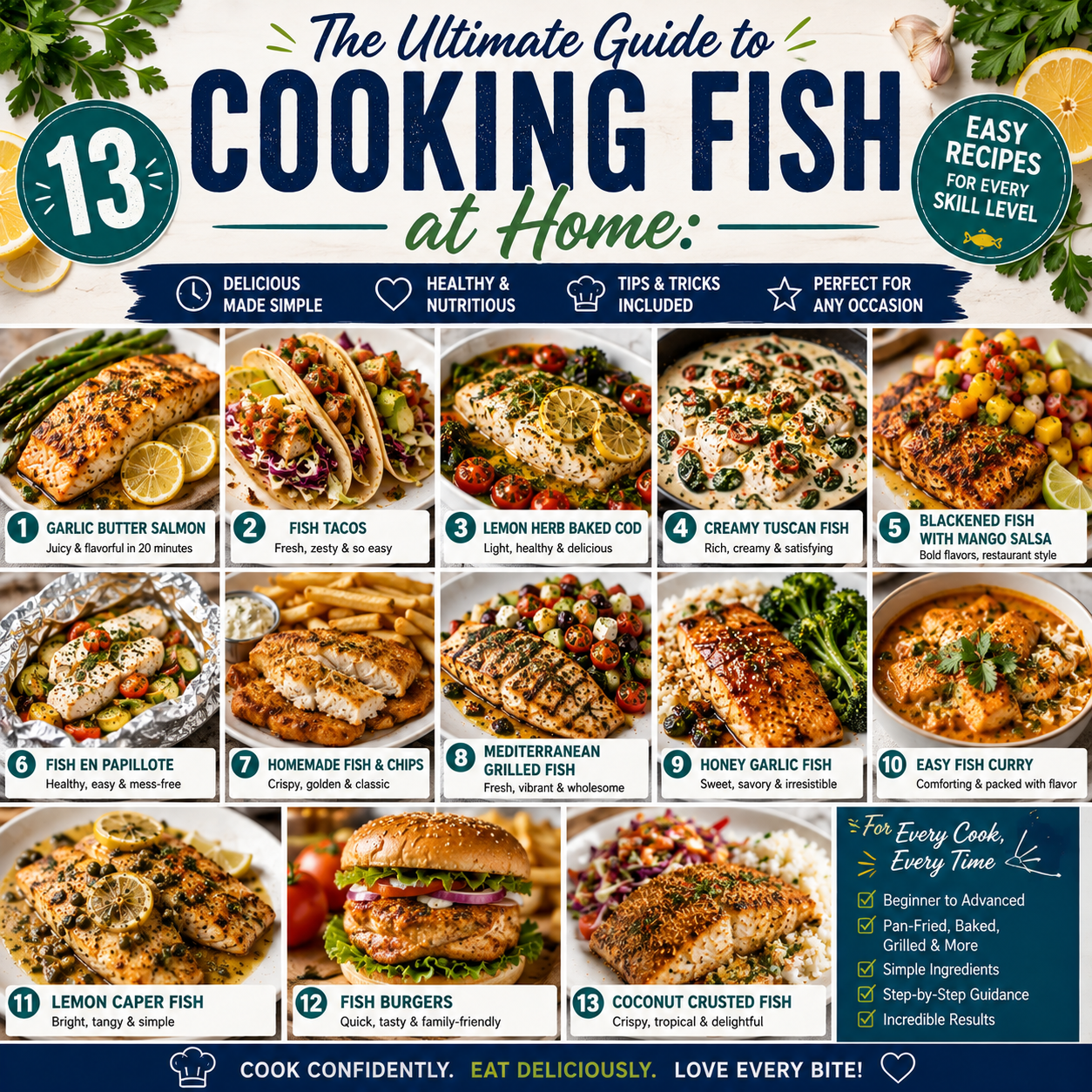
The Ultimate Guide to Cooking Fish
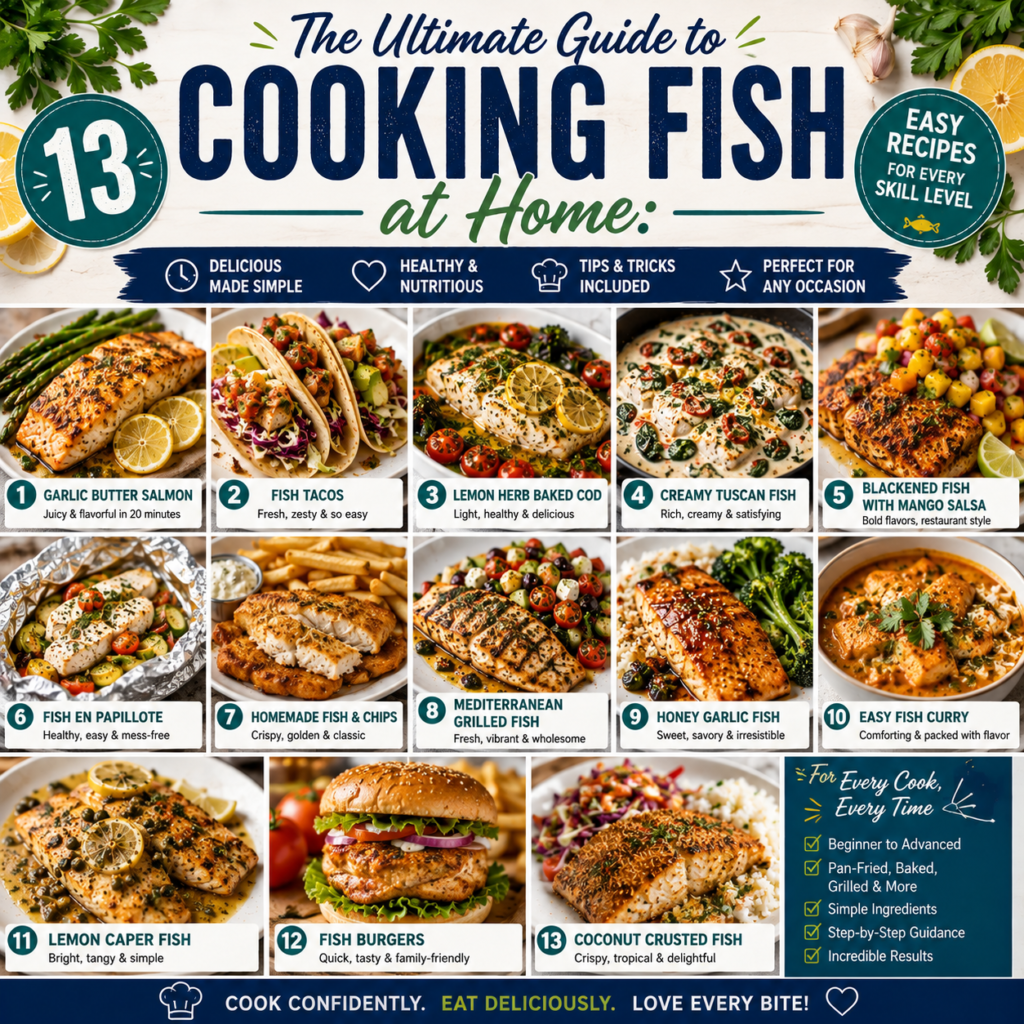
In this guide, you’ll find 13 fish recipes covering several cooking methods, including pan-searing, baking, grilling, and a few options that require almost no cooking at all. You’ll also find practical tips to help you choose the right fish and avoid the most common mistake: cooking it too long.
Choosing the Right Fish
Before you start cooking, it helps to know a little about the fish you’re buying.
Some varieties are firm and meaty, while others are delicate and flaky. Choosing the right type can make a big difference depending on the recipe.
Firm Fish The Ultimate Guide to Cooking Fish
Salmon, tuna, swordfish, and halibut have a firm texture and generally hold together well during cooking. They’re especially good for grilling, roasting, or cooking in a hot skillet.
Flaky White Fish
Cod, tilapia, haddock, and sole are lighter and more delicate. Their mild flavor makes them easy to pair with herbs, spices, sauces, and citrus. They’re particularly good for baking, pan-frying, and poaching. The Ultimate Guide to Cooking Fish
If you need to substitute one fish for another, try to choose something with a similar texture and thickness. That will usually give you the most reliable result.
Stovetop Fish Recipes
1. Pan-Seared Salmon
Pan-seared salmon is one of the easiest places to start if you’re learning how to cook fish.
Pat the salmon dry before seasoning it with salt and pepper. Heat a skillet with a little oil, then place the salmon skin-side down. Leave it alone for several minutes so the skin has time to become crisp.
The Ultimate Guide to Cooking Fish
Once the salmon is nicely browned and releases easily from the pan, flip it and cook the other side until the center is cooked through. Finish with fresh lemon juice for a simple meal that takes very little effort.
The Ultimate Guide to Cooking Fish
Serve it with roasted vegetables, rice, potatoes, or a fresh salad.
2. Blackened Tilapia
Tilapia has a mild flavor, which makes it a great fish for bold seasonings.
Mix paprika, garlic powder, thyme, cayenne, salt, and black pepper. Coat the tilapia fillets with the seasoning mixture, then cook them in a hot skillet with a little oil.
The outside develops a dark, flavorful crust while the inside stays tender. Cook for a few minutes on each side, depending on the thickness of the fillets.
The Ultimate Guide to Cooking Fish
Serve with rice, roasted vegetables, or warm tortillas.
3. Garlic Butter Shrimp
Technically shrimp are shellfish rather than fish, but they’re too good and too easy to leave out of a seafood recipe collection.
Heat butter in a skillet and add minced garlic. Once the garlic becomes fragrant, add the shrimp and cook until they’re pink and opaque.
A squeeze of fresh lemon and a handful of chopped parsley finish the dish beautifully.
Serve the shrimp over pasta, rice, or toasted bread to soak up all that garlic butter.
4. Easy Fish Piccata
Fish piccata looks impressive but is surprisingly simple to make.
Lightly coat thin white-fish fillets in flour and cook them in a skillet until golden on both sides. Remove the fish and use the same pan to make the sauce. The Ultimate Guide to Cooking Fish
Add lemon juice, capers, butter, and a little white wine. Let everything simmer briefly, then return the fish to the pan and spoon the sauce over the top.
The combination of lemon, butter, and salty capers gives this dish plenty of flavor without requiring a long ingredient list.
Oven-Baked Fish Recipes
5. Baked Salmon with Dijon Glaze
For an easy dinner with almost no hands-on cooking, baked salmon is hard to beat.
Mix Dijon mustard with honey and a little olive oil. Spread the mixture over the salmon, place the fillets on a baking sheet, and cook until the fish is tender and flakes easily.
The Ultimate Guide to Cooking Fish
The mustard and honey create a slightly sweet, tangy coating that becomes beautifully caramelized in the oven.
Pair it with steamed vegetables, roasted potatoes, or a simple green salad. The Ultimate Guide to Cooking Fish
6. Herb-Crusted Cod
If you enjoy crispy toppings but don’t want to deep-fry your fish, try herb-crusted cod. The Ultimate Guide to Cooking Fish
Combine breadcrumbs with grated Parmesan, fresh or dried herbs, garlic, and a little olive oil. Press the mixture over the cod fillets and bake until the topping becomes golden and crisp.
The contrast between the crunchy topping and tender fish makes this recipe especially satisfying.
It’s also a good option for families because cod has a mild flavor that isn’t overpowering. The Ultimate Guide to Cooking Fish
7. One-Pan Mediterranean Fish
This is the kind of dinner that’s perfect when you want something flavorful without creating a pile of dishes.
Place white-fish fillets in a baking dish and surround them with cherry tomatoes, olives, and thinly sliced fennel. Drizzle everything with olive oil and season with garlic, herbs, salt, and pepper.
As the fish cooks, the tomatoes soften and release their juices, creating a light sauce that brings everything together.
Serve it with crusty bread, rice, or couscous.
8. Foil-Packet Fish with Vegetables
Foil packets are one of the easiest ways to cook fish.
The Ultimate Guide to Cooking Fish
Place a fish fillet in the center of a large piece of foil and add sliced vegetables, herbs, seasoning, and a small amount of butter or olive oil. Fold the foil tightly around everything and bake until the fish is cooked.
The packet traps steam, helping the fish stay moist while the vegetables cook alongside it.
Another advantage is that everyone can customize their own packet. Add different vegetables or seasonings depending on what you have available.
The Ultimate Guide to Cooking Fish
Grilled Fish Recipes
9. Grilled Swordfish Steaks
Swordfish has a firm, meaty texture, which makes it particularly well suited to grilling.
The Ultimate Guide to Cooking Fish
Before cooking, brush the steaks with olive oil and season them with garlic, lemon juice, salt, and pepper. Place them on a hot grill and cook until you have clear grill marks and the fish is cooked through.
Avoid leaving swordfish on the grill too long, as it can become dry.
A simple tomato salad or grilled vegetables make excellent side dishes.
10. Cedar Plank Salmon
Cedar plank salmon is a fun way to add a gentle smoky flavor to your fish.
Soak the cedar plank in water according to the manufacturer’s instructions. Season the salmon with your favorite herbs and spices, then place it on the plank and cook it on a covered grill.
The plank helps protect the salmon from direct heat while adding a subtle wood-smoked flavor.
The Ultimate Guide to Cooking Fish
It’s a great recipe when you’re cooking for guests because it looks impressive without requiring complicated preparation.
11. Grilled Fish Tacos
Fish tacos are a quick and flexible dinner option.
The Ultimate Guide to Cooking Fish
Season firm white fish or shrimp with chili powder, lime juice, garlic, salt, and pepper. Grill until cooked, then break the fish into smaller pieces.
Warm some tortillas and fill them with the grilled fish, crunchy slaw, fresh cilantro, and a squeeze of lime.
You can also add avocado, salsa, or a simple yogurt-based sauce.
The Ultimate Guide to Cooking Fish
The whole meal can come together in around 15–20 minutes.
Quick Fish and Seafood Ideas
12. Simple Fish Ceviche
Ceviche is a refreshing option when you want something light.
Fresh, high-quality fish is cut into small pieces and combined with fresh citrus juice, which changes the texture of the fish. Add diced onion, tomato, cilantro, and salt for a bright and fresh dish.
The Ultimate Guide to Cooking Fish
Serve ceviche with tortilla chips, tostadas, or avocado.
Because ceviche involves raw seafood, it’s especially important to use properly handled, very fresh fish and follow local food-safety guidance.
13. Smoked Salmon Toast
When you don’t feel like cooking, smoked salmon can turn a few simple ingredients into a satisfying meal.
Toast a slice of bread and spread it with cream cheese. Add smoked salmon, capers, thinly sliced red onion, and a little fresh lemon juice.
It’s quick enough for a weekday breakfast, but also works nicely as a light lunch or appetizer.
How to Avoid Overcooking Fish
Cooking fish doesn’t have to be difficult, but timing matters.
One of the biggest mistakes people make is leaving fish on the heat too long. Because fish cooks quickly, even an extra few minutes can turn a tender fillet into something dry.
Here are a few things to keep in mind:
Don’t rely only on cooking time
The thickness of the fish, the cooking temperature, and the type of fish all affect how quickly it cooks.
Check the center
As fish cooks, its flesh changes from translucent to opaque. The center should be cooked through while still looking moist.
Remove it from the heat at the right time
Fish can continue cooking for a short period after you remove it from the oven or pan. Taking it off the heat just before it reaches its final temperature can help prevent overcooking.
Use a thermometer when possible
For most fish, the USDA recommends an internal temperature of 145°F (63°C) for food safety.
A thermometer takes the guesswork out of cooking and is especially useful when you’re still getting comfortable with fish recipes.
How to Store Leftover Fish
If you have leftovers, place the cooked fish in an airtight container and refrigerate it promptly.
For the best quality, use refrigerated cooked fish within a few days.
When reheating, gentle heat is usually better than blasting it in the microwave. A low oven covered loosely with foil can help prevent the fish from drying out.
If you’re using a microwave, heat it in short intervals and check it frequently.
Frequently Asked Questions About Cooking Fish
What’s the best fish for beginners?
Salmon and cod are both excellent choices.
Salmon has enough natural fat to stay relatively moist while cooking, while cod has a mild flavor and simple texture that works well with many different seasonings.
Should I remove the skin before cooking fish?
Not necessarily.
Keeping the skin on can help protect the fish while it cooks, and when pan-seared properly, the skin can become wonderfully crisp.
Whether you leave it on or remove it usually comes down to the recipe and your personal preference.
How do I know if fish is fresh?
Fresh fish should have a clean, mild smell rather than a strong unpleasant odor. If you’re buying whole fish, the eyes should generally look clear and the flesh should be firm.
When buying packaged fillets, check the package carefully and follow the storage and use-by information.
Can I use frozen fish for these recipes?
Yes, many fish recipes work perfectly well with frozen fish.
Thaw it safely in the refrigerator when possible. If you need to thaw it more quickly, use cold water and keep the fish properly sealed.
Before cooking, pat the fillets dry with paper towels. Removing excess moisture helps fish brown better in a skillet or oven.
What should I serve with fish?
Fish pairs well with simple sides.
Try roasted potatoes, rice, couscous, steamed vegetables, a green salad, grilled vegetables, or crusty bread.
For richer fish such as salmon, fresh salads and roasted vegetables can help balance the meal.
Final Thoughts
Learning how to cook fish at home is much easier than it might seem.
You don’t need complicated equipment or a long list of ingredients. Start with something simple, such as baked salmon, pan-seared cod, or grilled fish tacos. Pay attention to the thickness of the fish and avoid leaving it on the heat longer than necessary.
Once you get comfortable with the basics, you can experiment with different seasonings, sauces, cooking methods, and types of fish.
And that’s the fun part. A little lemon and garlic can create one kind of dinner, while chili, herbs, butter, or a fresh salsa can turn the same basic ingredient into something completely different.
So pick a recipe, grab some fresh fish, and give it a try. Your next favorite dinner might be only 20 minutes away.