
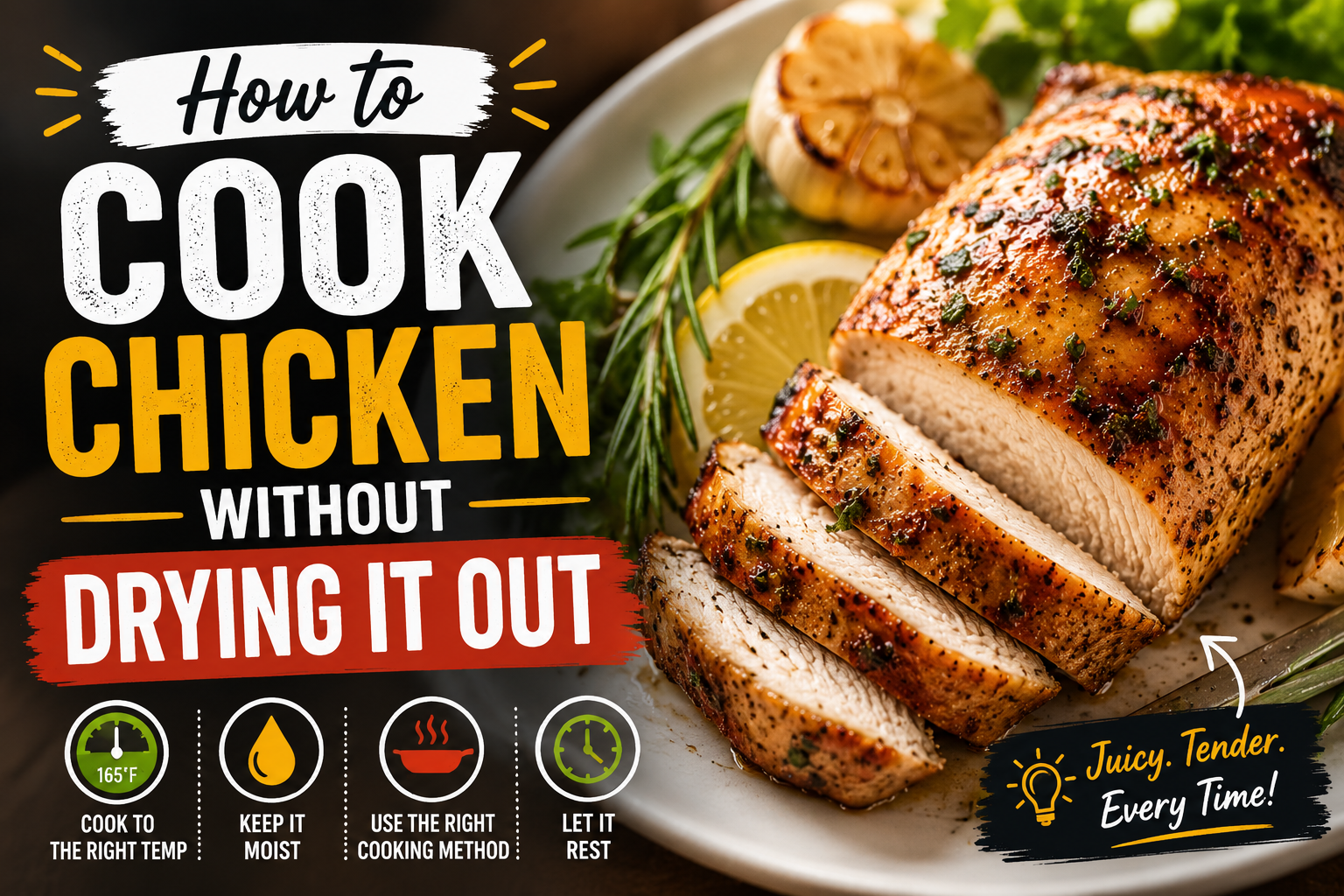
Chicken is one of the easiest foods to cook, but it is also one of the easiest to overcook.
We’ve all experienced it: you prepare what should be a delicious chicken dinner, only to cut into it and find that the meat is dry, tough, or lacking flavor.
The good news is that cooking juicy, flavorful chicken doesn’t require complicated techniques. With the right preparation, cooking temperature, seasoning, and a little attention to timing, you can make chicken that is tender and enjoyable every time.
In this guide, you’ll learn how to cook chicken without drying it out, along with simple tips you can use whether you’re baking, pan-frying, grilling, or cooking chicken in a skillet.
Why Does Chicken Become Dry?
The main reason chicken becomes dry is usually overcooking.
Chicken contains water and protein. As chicken cooks, its proteins tighten and release moisture. If the chicken stays on the heat for too long, more moisture is lost and the meat can become dry.
Other common causes include:
- Cooking chicken at the wrong temperature
- Using very thick pieces without adjusting cooking time
- Not seasoning the chicken properly
- Cooking very lean chicken breast for too long
- Cutting chicken immediately after cooking
- Using too much heat
- Skipping marinades or other moisture-adding methods
Understanding these problems makes it much easier to avoid them.
1. Choose the Right Chicken Cut
Not all chicken cuts behave the same way during cooking.
Chicken Breast
Chicken breast is lean and versatile, but it can become dry relatively quickly if overcooked.
It works well for:
- Baking
- Pan-searing
- Grilling
- Chicken pasta
- Chicken wraps
- Salads
Because chicken breast is lean, keeping an eye on the cooking time is especially important.
Chicken Thighs
Chicken thighs contain more fat than chicken breast, which makes them flavorful and more forgiving during cooking.
They are excellent for:
- Roasting
- Braising
- Skillet meals
- Curries
- One-pan dinners
- Grilling
If you’re new to cooking chicken, thighs can be a good place to start.
2. Don’t Cook Chicken Straight From the Refrigerator
If possible, allow your chicken to sit out briefly while you prepare your other ingredients.
This can help the chicken cook more evenly, especially when the pieces are thick.
However, don’t leave raw chicken at room temperature for an extended period. Keep food-safety considerations in mind when preparing poultry.
3. Pat the Chicken Dry
Before seasoning chicken, use paper towels to gently pat the surface dry.
This removes excess surface moisture and helps the outside of the chicken brown more effectively when pan-searing or roasting.
A dry surface can also help seasonings adhere better.
4. Season the Chicken Properly
Chicken has a relatively mild flavor, so good seasoning can make a huge difference.
A simple seasoning mixture might include:
- Salt
- Black pepper
- Garlic powder
- Paprika
- Dried herbs
- Onion powder
You don’t need a complicated spice mixture.
Even a simple combination of salt, pepper, garlic, and herbs can produce flavorful chicken.
5. Use a Marinade
Marinating chicken can add flavor and help make the finished dish more enjoyable.
A simple marinade can contain:
- Oil
- Lemon juice
- Garlic
- Herbs
- Spices
- Yogurt
- Soy sauce
For example, combine olive oil, lemon juice, garlic, dried herbs, salt, and pepper.
Place the chicken in the marinade and refrigerate it before cooking.
Avoid leaving chicken in highly acidic marinades for excessive periods because the texture can change.
6. Consider Brining Chicken Breast
Brining is another way to add moisture and seasoning to chicken.
A simple brine uses water and salt. The chicken is placed in the brine for a suitable period before cooking.
The salt helps the meat retain more moisture during cooking.
After brining, remove the chicken and pat it dry before seasoning and cooking.
Brining is particularly useful for lean chicken breasts.
7. Don’t Pound Chicken Unevenly
Chicken breasts can be thick in the middle and thin at the edges.
This can cause the thinner parts to become overcooked while you’re waiting for the thickest part to finish.
One solution is to gently pound the thickest part so the chicken has a more even thickness.
Place the chicken between sheets of food-safe plastic wrap or parchment and gently flatten the thickest areas.
This can help the chicken cook more evenly.
8. Don’t Use Excessive Heat
High heat can brown the outside of chicken quickly while the inside is still cooking.
For some cooking methods, higher heat is useful for developing color, but controlling the temperature is important.
When pan-cooking chicken, you can begin with enough heat to brown the outside and then reduce the heat as needed to finish cooking the center.
For oven cooking, use a reliable recipe temperature and check the chicken rather than relying only on time.
9. Use a Food Thermometer
One of the best tools for cooking juicy chicken is a food thermometer.
Instead of guessing whether chicken is done by cutting it open repeatedly, check the thickest part with the thermometer.
For food safety, poultry should reach an internal temperature of 165°F (74°C).
Insert the thermometer into the thickest part of the meat without touching bone when applicable.
This allows you to know when the chicken is ready without unnecessarily overcooking it.
10. Don’t Keep Cooking Chicken Just Because You’re Unsure
Many people continue cooking chicken because they’re worried it isn’t done.
This can lead to dry meat.
The safest approach is to use a food thermometer.
Once the chicken has reached the appropriate safe internal temperature, remove it from the heat.
11. Let Chicken Rest Before Cutting
After cooking chicken, don’t immediately slice into it.
Let it rest for a few minutes.
Resting gives the meat time to settle after cooking and can help make the chicken more enjoyable and juicy.
For larger pieces, a slightly longer resting period may be appropriate.
12. Don’t Cut Chicken Into Small Pieces Too Early
If you’re cooking chicken breast, keeping it whole while cooking can help reduce moisture loss compared with cutting it into many small pieces before cooking.
If you’re making a stir-fry, however, slicing the chicken before cooking is completely appropriate because the pieces are intended to cook quickly.
The important thing is to match the size of the chicken pieces to the cooking method.
13. Use a Sauce When Appropriate
Sauces can add flavor and moisture to chicken dishes.
Try:
- Garlic butter
- Tomato sauce
- Cream sauce
- Honey mustard
- BBQ sauce
- Lemon sauce
- Curry sauce
A simple sauce can turn a basic chicken breast into a much more flavorful dinner.
14. How to Keep Chicken Breast Juicy in the Oven
Chicken breast is one of the most common cuts to become dry.
To get better results:
- Preheat the oven.
- Pat the chicken dry.
- Season it well.
- Add a little oil.
- Place the chicken in a suitable baking dish.
- Avoid cooking it longer than necessary.
- Check the internal temperature with a thermometer.
- Let it rest before slicing.
The exact cooking time depends on the size and thickness of the chicken.
That’s why temperature is more reliable than simply following a fixed number of minutes.
15. How to Keep Chicken Juicy in a Skillet
Pan-frying chicken is quick, but it requires attention.
Start by seasoning the chicken.
Heat a skillet with a little oil.
Place the chicken in the pan and allow it to develop a golden-brown exterior.
Avoid constantly moving the chicken around.
Once the first side has browned, turn it over and continue cooking until the thickest part reaches the appropriate safe internal temperature.
For thicker chicken breasts, you can reduce the heat after browning so the center cooks without burning the outside.
16. How to Keep Chicken Juicy on the Grill
Grilled chicken can be delicious, but it can also dry out quickly.
Before grilling:
- Season or marinate the chicken
- Preheat the grill
- Clean the cooking surface
- Lightly oil the grates if appropriate
Place the chicken on the grill and cook according to its size and thickness.
Avoid repeatedly flipping the chicken or pressing it down with a spatula.
Pressing the chicken can release juices and doesn’t make it cook faster in a useful way.
Use a thermometer to determine when it is safely cooked.
17. How to Keep Chicken Juicy in an Air Fryer
Air fryers cook with circulating hot air, so chicken can become dry if cooked too long.
For better results:
- Pat the chicken dry.
- Season it well.
- Lightly coat it with oil if appropriate.
- Avoid overcrowding the basket.
- Cook according to the size and type of chicken.
- Check the internal temperature before continuing to cook.
- Remove the chicken once it reaches a safe temperature.
Air fryer cooking times can vary between models, so use temperature as your main guide.
18. Don’t Overcrowd the Pan
When cooking chicken pieces in a skillet, give them enough room.
If the pan is overcrowded, the chicken can release moisture and begin steaming instead of browning.
Cooking in batches may give you better browning and more consistent results.
19. Add Fat for Flavor
Lean chicken benefits from a little added fat.
Depending on the recipe, you can use:
- Olive oil
- Butter
- Avocado oil
- Cooking oil
- Coconut milk
- Cream
You don’t need a large amount.
A small amount of fat can help with browning and flavor.
20. Use Aromatics
Aromatics can make chicken much more flavorful.
Try cooking chicken with:
- Garlic
- Onion
- Shallots
- Ginger
- Fresh herbs
- Lemon
- Green onions
These ingredients can make even simple chicken dishes taste much more interesting.
Common Mistakes That Make Chicken Dry
Cooking It Too Long
This is the most common mistake.
Don’t continue cooking chicken simply because the recipe says “cook for another 10 minutes.”
Check the actual internal temperature.
Using Too Much Heat
Very high heat can burn the outside before the center is ready.
Control the heat and adjust it when necessary.
Not Seasoning Enough
Under-seasoned chicken can taste bland even when cooked perfectly.
Season the chicken before cooking and taste the finished dish when appropriate.
Cutting Chicken Immediately
Give cooked chicken a few minutes to rest before slicing.
Choosing Very Thick Pieces Without Adjusting Cooking
Thick chicken breasts take longer to cook than thin ones.
Consider flattening them slightly or adjusting your cooking method.
How to Make Chicken More Flavorful
If your chicken tastes boring, the problem isn’t always the cooking method.
Try changing the flavor profile.
Garlic and Herb Chicken
Use garlic, parsley, thyme, rosemary, black pepper, and lemon.
Spicy Chicken
Use paprika, chili powder, garlic, black pepper, and a little cayenne if desired.
Honey Garlic Chicken
Combine honey, garlic, soy sauce, and a little ginger.
Lemon Herb Chicken
Use lemon juice, olive oil, garlic, oregano, and black pepper.
BBQ Chicken
Use your favorite barbecue sauce with a simple dry seasoning.
What to Serve With Juicy Chicken
Chicken works with almost anything.
Rice
Try:
- Plain rice
- Fried rice
- Garlic rice
- Vegetable rice
Potatoes
Try:
- Mashed potatoes
- Roasted potatoes
- Baked potatoes
- Potato wedges
Vegetables
Try:
- Broccoli
- Carrots
- Green beans
- Zucchini
- Bell peppers
- Spinach
Pasta
Creamy pasta, tomato pasta, garlic pasta, and baked pasta can all work well with chicken.
Frequently Asked Questions
How do I keep chicken breast from drying out?
Avoid overcooking it, use a thermometer to check the internal temperature, and allow the chicken to rest before slicing. Marinating or brining can also add flavor and help with moisture retention.
What temperature should chicken reach?
Chicken and other poultry should reach an internal temperature of 165°F (74°C) for food safety.
Should I cover chicken when baking it?
It depends on the recipe. Covering chicken can help retain moisture in some preparations, while uncovered cooking can provide better browning. Follow the method appropriate for the recipe.
Is chicken thigh harder to dry out than chicken breast?
Chicken thighs generally contain more fat and can be more forgiving than lean chicken breast. However, any chicken cut can become dry if it is significantly overcooked.
Should I marinate chicken overnight?
Some marinades can be used for longer periods, while highly acidic marinades can affect the texture if left too long. Follow a recipe’s recommended marinating time and always refrigerate chicken while it marinates.
Why is my chicken dry even when I followed the recipe?
Chicken pieces vary in size and thickness, and ovens, grills, and stovetops can also vary. A cooking time that works for one piece may not work for another. Using a food thermometer is more reliable than cooking by time alone.
Final Thoughts
Learning how to cook chicken without drying it out is mostly about controlling the cooking process.
Choose the right chicken cut, season it properly, avoid unnecessary overcooking, control your heat, and use a food thermometer to know when the chicken is safely cooked.
You don’t need complicated techniques to make great chicken at home.
Once you understand these basic principles, you can use them for baked chicken, skillet chicken, grilled chicken, chicken pasta, chicken rice, stir-fries, and countless other meals.
The next time you cook chicken, focus less on the clock and more on the actual food in front of you.
With a little practice, juicy and flavorful chicken can become a regular part of your home cooking.